

The cryptocurrency market has rapidly evolved from simple retail speculation to a complex ecosystem where speed, data analysis, and strategic intelligence determine success. One of the most transformative innovations in this space is the crypto trading AI agent — autonomous systems capable of analyzing markets, executing strategies, and learning from real-time data.
This article explores the concept, technical foundations, and practical applications of AI agents in crypto trading, while providing insights into crypto AI agent development for both developers and traders.
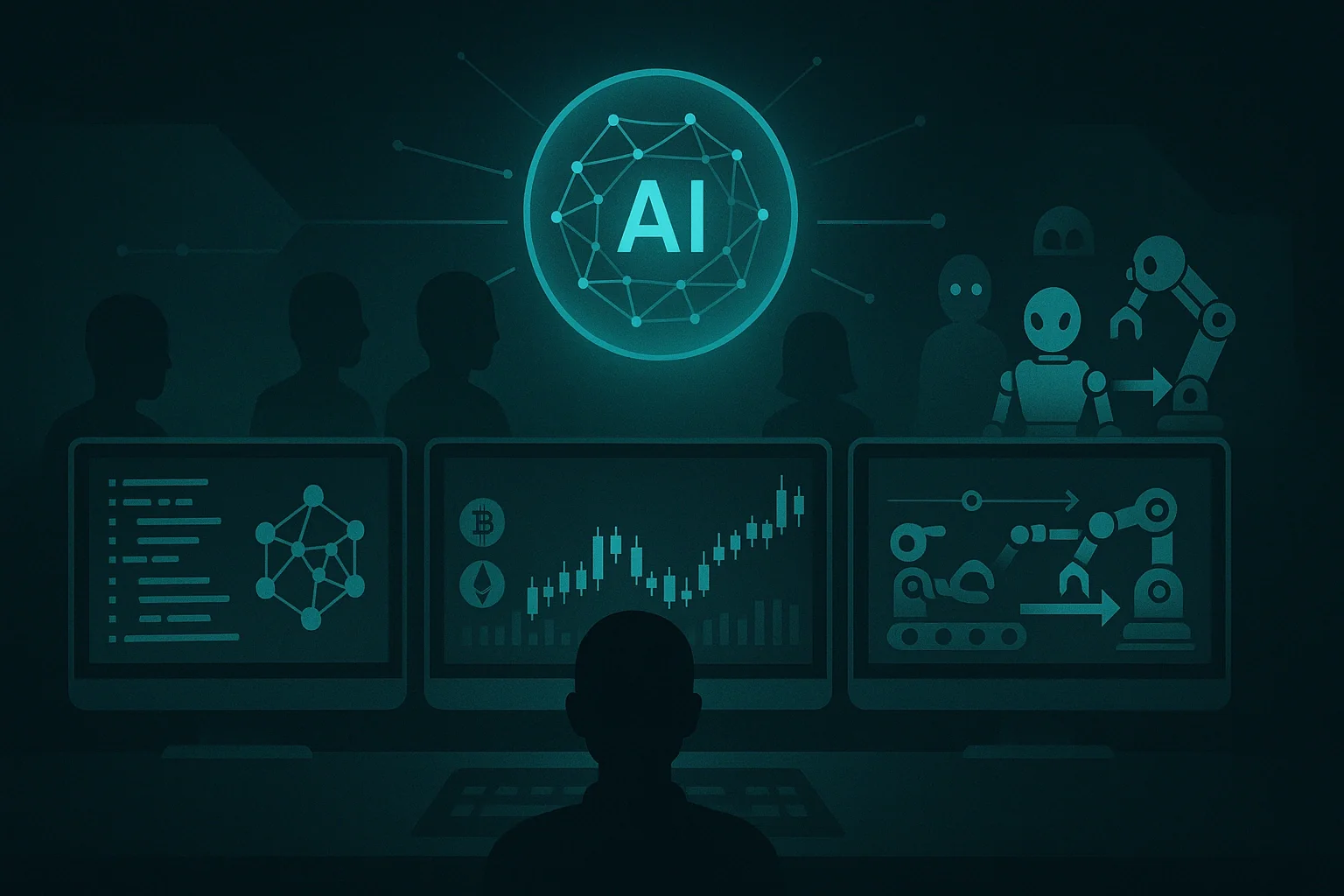
1. What Is a Crypto Trading AI Agent?
A crypto trading AI agent is an autonomous software system designed to make data-driven trading decisions without constant human intervention. Unlike traditional bots that follow pre-defined rules, AI agents:
- Analyze multi-source market data
- Adjust strategies dynamically
- Manage risk in real-time.
- Execute trades across multiple crypto assets efficiently.
These agents act as intelligent trading partners, combining speed, accuracy, and adaptability.
2. How AI Agents Interact With Crypto Coins
The term AI agent crypto coin refers to two related concepts:
- Agents managing or trading specific coin
The AI monitors price movements, volume, liquidity, and on-chain activity to optimize positions in a particular crypto asset.
- Tokens powering AI ecosystems
Some platforms issue tokens that facilitate AI agent operations, pay for computational resources, or participate in governance.
Understanding these dynamics is essential for implementing or using AI-driven systems effectively.
3. Core Components of Crypto AI Agent Development
Developing a robust crypto AI agent involves integrating multiple technical layers:
3.1. Data Processing Layer
- High-frequency market data (price, volume, order book)
- On-chain metrics (wallet activity, smart contract transactions)
- Sentiment analysis from social media and news
- Market anomalies and volatility patterns
3.2. Strategy Layer
- Trend-following and momentum strategies
- Mean reversion and statistical arbitrage.
- AI-driven predictive models (machine learning, reinforcement learning)
- Multi-asset and cross-exchange decision-making
3.3. Risk Management Layer
- Volatility-adjusted position sizing
- Dynamic stop-loss and take-profit levels
- Portfolio diversification and correlation management
- Automated drawdown limits
3.4. Execution Layer
- Low-latency order routing
- Slippage minimization
- Multi-exchange optimization
- Adaptive order splitting
These layers work together to form an end-to-end crypto trading AI agent capable of autonomous operation.
4. Practical Applications of AI Agents in Crypto Trading
4.1. Automated Market Making
Agents continuously provide liquidity while dynamically adjusting spreads and exposure based on real-time market conditions.
4.2. Arbitrage and Cross-Exchange Trading
Agents exploit pricing inefficiencies between exchanges, assets, or derivative products to generate consistent profits.
4.3. Portfolio Optimization
Agents rebalance crypto portfolios automatically according to risk models, market sentiment, and asset correlations.
4.4. Predictive Analysis
AI agents forecast potential market moves by integrating multi-source data, including on-chain signals, price trends, and social sentiment.
5. The Development Process for Crypto AI Agents
Building a crypto AI agent requires both software engineering and financial expertise. Key steps include:
- Defining Goals – e.g., profit maximization, risk minimization, or automated market making
- Data Integration – collecting historical, real-time, and on-chain data streams
- Model Selection – machine learning (supervised, unsupervised), reinforcement learning, or hybrid approaches
- Backtesting and Simulation – validating performance against historical and synthetic market data
- Deployment – connecting to exchanges, configuring execution engines, and enabling real-time monitoring
- Continuous Learning – implementing feedback loops to improve decision-making over time
This structured approach ensures a resilient, adaptable, and efficient AI agent.
6. Advantages of Crypto AI Agents
- Operate 24/7 without fatigue.
- React faster than humans to market volatility.
- Analyze vast datasets beyond human capabilities.y
- Learn and adapt to new conditions over time.
- Reduce emotional bias in trading decisions.
These advantages explain why crypto AI agent development is becoming a standard in professional and institutional trading.
7. Future Trends in Crypto AI Agent Technology
- Multi-agent collaboration – several AI agents working together for strategy optimization
- Autonomous token ecosystems – agents issuing or managing their own digital assets
- Predictive risk intelligence – AI forecasting potential drawdowns before they occur
- Integration with decentralized finance (DeFi) – agents performing lending, yield farming, and automated liquidity operations
By 2025, AI agents will no longer be optional tools; they will become core infrastructure for advanced crypto trading.
Conclusion
A crypto trading AI agent is far more than a trading bot. It represents a new paradigm in digital asset management, combining data analysis, strategy optimization, and autonomous execution.
Understanding AI agent crypto coin interactions and the principles of crypto AI agent development is essential for traders and developers aiming to succeed in modern markets.
AI agents are the future of crypto trading, enabling smarter, faster, and more consistent performance in a rapidly evolving ecosystem.
Related Articles

Advanced Automated Crypto Trading Strategies: Technical Breakdown of Modern Bot Architectures and Execution Models

AI Agent Tokens in Crypto: Understanding Coin Crypto AI Agent Systems and Applications
